


Table of Contents
Direct answer. If you are a Muslim resident or citizen in the UAE, your estate is distributed by default under fixed Sharia inheritance shares (fara'id) governed by Federal Decree-Law No. 41 of 2024 on Personal Status (and the Civil Personal Status Law No. 41 of 2022 for non-Muslims). A Sharia-compliant will — known as a wasiyya — cannot override those fixed shares for legal heirs, but it can dispose of up to one-third (1/3) of the net estate in favour of non-heirs, charitable causes, or specific bequests. Wills are registered through the personal-status courts (notary public or family-guidance section) in your emirate. This guide walks through the rules, the drafting steps, the registration channels, the most common disputes, and how the Muslim path differs from the DIFC / ADJD will registries used by non-Muslims.
Why a Sharia will still matters even though shares are "fixed"
A common misconception is that Muslims in the UAE do not need a will because Sharia "already decides everything". In practice, a registered wasiyya solves three real problems:
- It names a guardian (wasi) for minor children and a trustee (qayyim) for their property — without this, the court appoints one, often after long hearings.
- It uses the discretionary one-third to provide for people who would otherwise inherit nothing under fara'id: an adopted child, a stepchild, a non-Muslim spouse (who does not inherit under classical Sunni doctrine), a long-serving employee, or a charitable endowment (waqf).
- It speeds up the release of UAE bank accounts, real estate, vehicles, and business shares. Banks freeze accounts on death until heirs produce a succession certificate; a clear will and named executor cuts months off this freeze.
The 1/3 rule. A Muslim testator in the UAE may will away at most one-third of the net estate (after debts and funeral costs) to non-heirs. The remaining two-thirds — and the entire estate if no wasiyya exists — is divided among legal heirs according to Sharia fixed shares.
Need a lawyer for this?
Find a LawyerThe legal framework in 2026
UAE personal-status matters for Muslims are now governed primarily by Federal Decree-Law No. 41 of 2024 on Personal Status, which replaced the long-standing Federal Law No. 28 of 2005. The 2024 law restated the inheritance rules largely intact: classical Sunni jurisprudence applies by default; the testator may elect a different recognised school in writing; and non-Muslims may opt out entirely under the Civil Personal Status Law applicable in Abu Dhabi (and the federal civil personal status framework introduced in 2022).
For UAE Government overviews of inheritance and wills, see the official portal at u.ae — Wills and Inheritance and the Ministry of Justice at moj.gov.ae. Always check the current version before acting — personal-status legislation has been amended three times in five years.
Who counts as a legal heir under Sharia?
Sharia divides heirs into two main categories:
- Quranic heirs (ashab al-furud) — those whose shares are fixed in the Qur'an. They include the spouse, parents, daughters, and certain siblings under defined conditions.
- Residuary heirs (asaba) — typically male agnates (sons, father, brothers, paternal uncles) who take whatever remains after the Quranic shares are paid out.
A simplified view of the most common shares (for orientation only — the exact arithmetic depends on which combination of heirs survives):
| Heir | Typical fixed share |
|---|---|
| Wife (with children) | 1/8 |
| Wife (no children) | 1/4 |
| Husband (with children) | 1/4 |
| Husband (no children) | 1/2 |
| Mother (with children or multiple siblings) | 1/6 |
| Father (with male descendant) | 1/6 plus residue conditions |
| One daughter (no son) | 1/2 |
| Two or more daughters (no son) | 2/3 (shared) |
| Son | Twice a daughter's share (residuary) |
Non-Muslim spouses, adopted children, and children born out of wedlock do not inherit under classical Sunni rules. This is precisely where the 1/3 wasiyya becomes the practical lifeline.
Drafting a Sharia-compliant wasiyya: the elements
A valid Sharia will in the UAE generally contains:
- Testator's full identifying details — name as on Emirates ID, nationality, religion, marital status, Emirates ID number.
- Declaration of Islam and legal capacity — that the testator is Muslim, of sound mind, and acting freely.
- Appointment of an executor (wasi) — a trusted adult Muslim, ideally UAE-resident, with a clear back-up.
- Guardian for minor children — separate from the executor if you wish.
- The 1/3 bequest — to whom, in what proportion, with conditions (e.g. "to be paid only after my youngest child turns 21").
- Specific assets and their location — UAE bank accounts, properties (with title-deed numbers), business shares, vehicles, jewellery, and any overseas assets.
- Funeral and burial instructions — burial in the UAE or repatriation, charitable donations from the 1/3 share.
- Statement that fara'id applies to the remaining 2/3 — to avoid any ambiguity later.
- Two adult Muslim male witnesses (or one male and two females, per classical rules); the notary will witness and seal.
The will must be in Arabic, or in English/Arabic bilingual form with the Arabic version controlling. The notary public will not register an English-only Muslim will.
Where and how to register the will
Muslims register a wasiyya through the notary public of the local court or through the family-guidance section of the personal-status courts in the emirate where they reside. Practical channels:
- Dubai Courts — Notary Public: in-person at any Dubai Courts notary branch, or via the Dubai Courts smart application. Bring original Emirates ID, passport, marriage certificate (if applicable), title deeds for property, and two witnesses. See Dubai Courts.
- Abu Dhabi Judicial Department (ADJD): the notary public service at any ADJD service centre or through ADJD's e-services. See adjd.gov.ae.
- Other emirates: the local courts department in Sharjah, Ajman, RAK, UAQ, and Fujairah operate notary services through the Ministry of Justice or the local judicial department.
Registration fees are set per emirate and per asset complexity. Confirm current fees on the relevant court's official portal before attending — published prices change without notice.
If you would like a UAE-qualified family lawyer to draft and review the wasiyya before notarisation, you can find a personal-status lawyer on LEXAI. A pre-registration legal review is often what catches an invalid bequest before the court rejects it.
Sharia will vs DIFC / ADJD non-Muslim will
This is the single most asked question in UAE estate planning.
| Feature | Sharia wasiyya (Muslims) | DIFC Wills / ADJD non-Muslim will (non-Muslims) |
|---|---|---|
| Governing framework | Federal Decree-Law No. 41 of 2024 + Sharia | DIFC Wills Service Centre rules; ADJD non-Muslim civil law |
| Distribution | Fixed Sharia shares + 1/3 free disposition | 100% testamentary freedom |
| Religion of testator | Muslim | Non-Muslim |
| Language | Arabic controlling | English |
| Where registered | Local notary / personal-status court | DIFC Wills Service Centre or ADJD non-Muslim wills registry |
| Recognised emirates | All seven | All seven (DIFC will is recognised UAE-wide for non-Muslims) |
A Muslim cannot register a will at the DIFC Wills Service Centre — the centre's mandate is limited to non-Muslims. For the DIFC framework, see DIFC Courts — Wills.
What happens at death: the succession process
When a Muslim dies in the UAE:
- Death certificate issued by the relevant health authority and then registered with the ICP (Federal Authority for Identity, Citizenship, Customs and Port Security).
- Heir succession application filed at the personal-status court in the emirate of residence. Heirs submit IDs, family book (for citizens), marriage and birth certificates, and any registered will.
- Heirship certificate issued by the court identifying the legal heirs and their respective fixed shares.
- Wasiyya implementation — if a registered will exists, the executor applies the 1/3 disposition first, then fara'id divides the remaining 2/3.
- Asset release — banks, the Roads and Transport Authority (for vehicles), the Land Department (for real estate), and the relevant free zone authorities (for business shares) release assets against the heirship certificate and any court order.
Expect the full process to take weeks to months depending on asset complexity, whether heirs are abroad, and whether any heir contests the will.
Common disputes and how to avoid them
- Bequest exceeds 1/3. The portion over 1/3 is void unless all adult heirs consent in writing after the testator's death.
- Bequest to a legal heir. A wasiyya cannot grant additional shares to someone who already inherits under fara'id, unless all other heirs consent post-death.
- Disputed school of jurisprudence. Specify in the will which school (Hanafi, Maliki, Shafi'i, Hanbali, Ja'fari) you elect; defaults can produce surprising results.
- Foreign assets. A UAE-registered Muslim will may not control assets in jurisdictions that ignore Sharia by default; pair with mirror wills in the relevant countries.
- Outdated executor. Review the will after divorce, remarriage, the death of a named executor, or a major asset purchase. Re-notarise.
For complex estates — multiple jurisdictions, a non-Muslim spouse, business interests, or a child with special needs — get a UAE inheritance lawyer to review the draft before you sit down with the notary. The cost of redrafting once is a fraction of the cost of litigating the will later.
Practical checklist before you book the notary
- Updated Emirates ID and passport copies for the testator and witnesses.
- Original marriage certificate (attested if issued abroad).
- Title deeds, share certificates, bank-account list, vehicle registrations.
- Draft wasiyya in Arabic (or bilingual with Arabic controlling).
- Written confirmation of the school of jurisprudence you elect.
- A named executor who has consented in writing.
- Two witnesses meeting Sharia capacity requirements.
This article is general legal information and not legal advice. Personal-status law is fact-specific. Confirm the current rules and your individual situation with a licensed UAE lawyer before signing or registering any will.
Last updated 2 June 2026
Frequently Asked Questions
Ask a UAE lawyer
Asking is free, and you don't need an account.
Talk to a Family Law lawyer in the UAE
Browse UAE lawyers ready to help with your matter.

Corporate Commercial, Criminal Law +8
I am a lawyer and legal consultant practicing in the United Arab Emirates with Dr. Ahmed Al Maamari Advocates & Legal Consultants, providing professional legal services and advice to both individuals and businesses, with a strong focus on protecting clients’ rights and delivering practical and effective legal solutions. My practice focuses on corporate and commercial disputes, cheque-related cases, debt recovery and financial claims, civil litigation, fraud and financial crime cases, as well as the drafting and review of contracts, agreements, legal memoranda, and other legal documents. I approach every matter with careful attention to its facts, documents, and available evidence in order to develop an appropriate legal strategy tailored to the client’s interests. I am committed to professionalism, confidentiality, accuracy, and diligent representation throughout every stage of the legal process.
Contact for fees

International Arbitration, General +8
Dr. Ibrahim Hassan Al Mulla is the founder of Azza Ebrahim Hasan Al Mulla Advocates and Legal Consultants (formerly Ebrahim Hasan Al Mulla & Partners), a UAE law firm licensed in Dubai since 1995 (Commercial License No. 129252) with three offices across the UAE and a team of more than 60 lawyers. He practises as an arbitrator and lectures at judicial academies and universities in the UAE. The firm's work spans legislation and law drafting, government and administrative matters, governance, banking, commercial, defence, construction, and dispute resolution, acting for government entities, corporates, multinationals, state-owned enterprises and financial institutions. He is a member of the UAE Bar Association, the Arab Arbitration Committee, and UNCITRAL.
AED 2,100 / per consultation

Civil Litigation, Criminal Law +8
Mohammad Yasser Kassem is a legal consultant at Othman Almarzooqi Advocates and Legal Consultations in Dubai, registered with the Dubai Legal Affairs Department, and founder of KASSEM & Co. He has more than 10 years of experience in the UAE, focusing on litigation, family law, and commercial matters. He represents individuals and businesses in disputes before the UAE courts, holds a law degree, is a member of the Egypt Bar Association, and works in Arabic and English.
AED 750 / per consultation
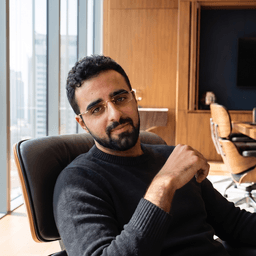
Founder of LEXAI
Milad Mevlevi is the founder of LEXAI, a bilingual legal directory for the UAE. He studied International Business at the University of Salford. The idea for LEXAI grew out of his own experience seeking legal help in 2022. Searching for “lawyers near me” brought up listings, but he struggled to find verifiable credentials, reviews he could trust and detailed biographies that would help him choose a lawyer with confidence. That experience led him to create LEXAI, with the aim of making it easier for people to assess legal professionals before contacting them.