

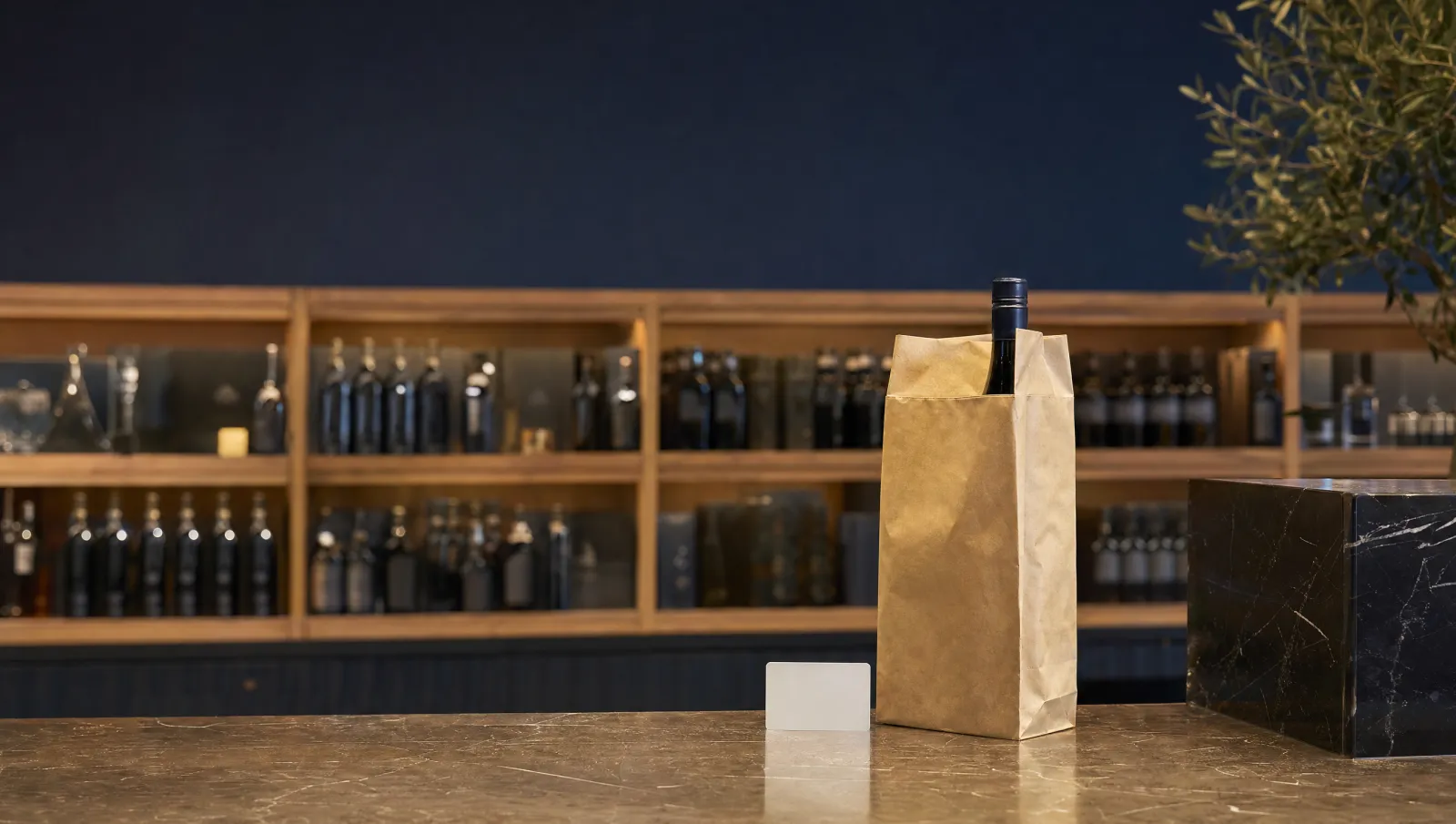
Direct answer. There is no licence issued by MMI. MMI is one of the UAE's licensed alcohol retailers, and when people search for an "MMI license" they almost always mean the personal alcohol permit — a government document that allows a non-Muslim adult aged 21 or over to buy alcohol from a licensed shop and keep and drink it at home. The retailer takes your application at the counter; the emirate issues the permit and polices it. Dubai runs its own licensing framework under Dubai Police oversight, and the federal backdrop is Article 363 of the Crimes and Penalties Law, Federal Decree-Law No. 31 of 2021, which leaves alcohol regulation to each emirate and criminalises drinking in public or outside the permitted circumstances. The permit belongs to the emirate that issued it. It does not travel with you across the country.
The single most useful thing to understand: the shop is not the regulator
Two different things get collapsed into one phrase, and the confusion costs people money and occasionally their liberty.
The first is the retailer. MMI — Maritime and Mercantile International — is a licensed alcohol retailer with branches across parts of the UAE. So is African + Eastern. These are shops. They hold commercial licences allowing them to sell alcohol, and they act as the intake counter for personal permit applications.
The second is the permit. That is issued under the licensing framework of the emirate you live in, not by the shop. The shop captures your details, submits them, and later confirms that the permit is live. If the permit is refused, suspended or expired, the shop cannot fix that for you — it is not the authority that granted it.
Why this matters in practice: people assume that because a store sold them a bottle, the transaction was lawful everywhere they then took it. The sale can be entirely lawful and the next thirty minutes can still be an offence, depending on where you drive, where you open the bottle, and who is with you.
What the permit actually lets you do
The personal alcohol permit is narrow, and it is narrow on purpose. Read it as three permissions and a long list of silences.
What it covers:
- Purchase. You may buy alcohol from a licensed retail store in the emirate that issued the permit.
- Possession. You may keep what you bought, in your home.
- Consumption at home. You may drink it in your private residence.
What it does not cover:
- Drinking in a street, park, beach, car park or any other public place. Article 363 makes that an offence regardless of where the drink was bought or whether you hold a permit.
- Being drunk and disorderly in public. That is a separate offence and it is the one that actually reaches most people.
- Anything behind the wheel. A permit is not a defence to drink-driving, and it never has been.
- Supplying alcohol to anyone under 21, including at a private party in your own home.
- Carrying alcohol into an emirate that prohibits it.
If you want the full Dubai-specific process — eligibility conditions, the document list, the fee position, tourist permits and validity — read the companion guide to the personal liquor licence in Dubai. This article is about the retailer route, the cross-emirate problem, and what goes wrong afterwards.
Who can hold one
Three conditions dominate, and all three are checked at application rather than assumed.
- Religion. The personal permit is issued to non-Muslims. That is a standing feature of the emirate-level frameworks, not a single emirate's quirk.
- Age. The minimum is 21. It tracks the federal floor set in Article 363 of the Crimes and Penalties Law, and no emirate permit can be issued below it.
- Residence. The resident permit is tied to a UAE residence visa and an Emirates ID. Someone here on a visit is routed to the visitor arrangement instead.
Older guides still repeat conditions that have been dropped in some emirates — a minimum salary, an employer's no-objection letter, a sponsor's signature. Requirements are set by the licensing authority in each emirate and change over time. Confirm the current list with the police authority in your emirate or with the retailer taking the application before you gather documents you may not need.
Applying at the counter: how the process actually runs
The application is built to be finished in one visit. In outline:
- Go to a branch of a licensed alcohol retailer in your emirate, or use that retailer's online application channel if it offers one.
- Present your Emirates ID and passport. Staff capture the application on the licensing system the emirate authority operates.
- Wait for the approval, which is normally communicated electronically rather than over the counter.
- Once it is live, the permit is checked at the till on every purchase. In Dubai it is typically digital and tied to your identity rather than a card you can lose.
Two practical notes. First, the permit has a fixed validity and must be renewed through the same channel to keep buying — an expired permit is treated as no permit, not as a grace period. Second, the fee position has changed in recent years in more than one emirate and is set by the authority, not the shop. Confirm the current fee and validity period with the police authority or the retailer rather than relying on a figure you read on a forum.
Why an MMI permit is not a UAE-wide pass
This is the part that catches residents who move, commute or take a weekend trip.
Alcohol is regulated emirate by emirate. Article 363 of the Crimes and Penalties Law hands that regulation to each emirate expressly, so there is no single national rulebook and no single national permit.
- Dubai operates its own licensing framework, overseen by Dubai Police, with retail sales through licensed stores.
- Abu Dhabi operates a separate framework, and its requirements have been liberalised over recent years. Confirm the current position for the emirate with its own authorities or the retailer before assuming your Dubai paperwork means anything there.
- Sharjah prohibits alcohol. Possession inside the emirate is an offence. A permit from another emirate changes nothing, and neither does a sealed bag with a receipt in it.
- The other emirates each run their own rules, which are not identical to Dubai's.
The practical rule is short. When you cross an emirate border, assume the rules changed with it. The commonest version of this mistake is a lawful purchase in Dubai transported through or into Sharjah on the way home — lawful at the till, an offence forty minutes later.
The five mistakes that turn a purchase into a police file
Enforcement rarely looks like a licence check outside a shop. Alcohol counts usually surface attached to something else, which is why the sequence below matters more than the permit itself.
- Drinking somewhere public. A beach, a corniche, a car park, a building's shared podium. Location alone is the offence and a valid permit is not a defence.
- Carrying it into a prohibiting emirate. Sealed, unopened and paid for is still possession where possession is banned.
- Driving after any amount. The offence under the federal traffic law engages the criminal court, the vehicle and your driving entitlement at once. The detail is in the guide to UAE drink-driving law, and the short version is that there is no safe figure to plan around.
- Passing a drink to someone under 21. This reaches hosts and buyers, not only shops.
- Letting the permit lapse. Buying on an expired permit is buying without one.
Where conduct crosses into an offence it is typically prosecuted as a misdemeanour, and for a resident the criminal file is rarely the whole consequence — an alcohol conviction can carry immigration and employment consequences on top. You can check how a term like that is used in UAE practice in the LEXAI legal dictionary, and read the federal instruments themselves in the UAE legislation library.
Penalties, honestly stated
The offences that reach individuals cluster into four: possessing or buying without the required permit, drinking in a public or unauthorised place, public intoxication causing a disturbance, and supplying alcohol to someone under 21. Each can carry imprisonment, a fine, or both.
The exact fine amounts and custodial terms sit in Federal Decree-Law No. 31 of 2021 and are applied by the courts, and they change. Numbers circulating on expatriate forums are frequently out of date, sometimes by more than a decade. Confirm current penalties with the Ministry of Justice or a lawyer licensed in the UAE rather than budgeting around a figure from a comment thread.
There is also a duty-free question people get wrong on arrival. Allowances for arriving passengers are set by the customs authority, not by the alcohol retailer or the permit, and they have their own limits. Check the current allowance with the relevant customs authority before you fly, and never assume that a duty-free purchase substitutes for the permit that governs what happens after you leave the airport.
If a file already exists
If you have been stopped, questioned, asked to sign a statement, or told a report has been filed, the alcohol question has already stopped being administrative. Three things help at that point, and all three are cheap compared to the alternative.
Do not sign a statement you have not understood, in a language you do not read, on the assurance that it is routine. Do not assume a first offence is automatically settled with a fine. And do not discuss the file with anyone other than a lawyer before you have taken advice — in a case that already involves a complaint or an accident, the first interview is usually the one that shapes everything after it.
What to do now
Match the next step to your situation.
- Resident who wants to buy lawfully. Check the three eligibility conditions, take your Emirates ID and passport to a licensed retailer in your own emirate, and confirm the current fee, document list and validity period before you go.
- Visitor. Drinking in licensed venues is covered by the venue's own licence if you are 21 or over. For retail purchases, ask the retailer about the visitor arrangement in that emirate rather than assuming you may buy freely.
- Moving or commuting between emirates. Treat each border as a rule change, and never transport alcohol into an emirate that prohibits it.
- Facing a charge. Treat it as a criminal matter from the first interview. You can find and compare UAE criminal lawyers and contact one directly — LEXAI lists lawyers, and you engage and pay the lawyer yourself, off-platform, on terms you agree with them. If you want to understand the process first, you can ask a legal question in plain language.
This article is general information about alcohol permits and UAE alcohol rules. It is not legal advice on your situation, and the rules differ by emirate.
Last updated 2 October 2026
Frequently Asked Questions
Ask a UAE lawyer
Asking is free, and you don't need an account.
Talk to a Criminal Law lawyer in the UAE
Browse UAE lawyers ready to help with your matter.

Corporate Commercial, Criminal Law +8
I am a lawyer and legal consultant practicing in the United Arab Emirates with Dr. Ahmed Al Maamari Advocates & Legal Consultants, providing professional legal services and advice to both individuals and businesses, with a strong focus on protecting clients’ rights and delivering practical and effective legal solutions. My practice focuses on corporate and commercial disputes, cheque-related cases, debt recovery and financial claims, civil litigation, fraud and financial crime cases, as well as the drafting and review of contracts, agreements, legal memoranda, and other legal documents. I approach every matter with careful attention to its facts, documents, and available evidence in order to develop an appropriate legal strategy tailored to the client’s interests. I am committed to professionalism, confidentiality, accuracy, and diligent representation throughout every stage of the legal process.
Contact for fees

Civil Litigation, Criminal Law +8
Mohammad Yasser Kassem is a legal consultant at Othman Almarzooqi Advocates and Legal Consultations in Dubai, registered with the Dubai Legal Affairs Department, and founder of KASSEM & Co. He has more than 10 years of experience in the UAE, focusing on litigation, family law, and commercial matters. He represents individuals and businesses in disputes before the UAE courts, holds a law degree, is a member of the Egypt Bar Association, and works in Arabic and English.
AED 750 / per consultation

Family Law, Criminal Law +8
(Al-Hesn Legal Consulting) office is considered one of the offices specialized in providing comprehensive legal services to individuals and companies, as we are keen to provide precise and effective legal solutions that comply with the laws and regulations applicable within the United Arab Emirates. We also have a team of legal advisors with high expertise and efficiency, and legal knowledge acquired through years of experience in all branches of law, including civil, commercial, criminal, labor law, and personal status, which enables us to provide reliable consultations that meet our clients’ needs with high efficiency. We also have a team of legal advisors with high expertise and efficiency, and legal knowledge acquired through years of experience in all branches of law, including civil, commercial, criminal, labor law, and personal status, which enables us to provide reliable consultations that meet our clients’ needs with high efficiency.
AED 250 / per consultation

Founder of LEXAI
Milad Mevlevi is the founder of LEXAI, a bilingual legal directory for the UAE. He studied International Business at the University of Salford. The idea for LEXAI grew out of his own experience seeking legal help in 2022. Searching for “lawyers near me” brought up listings, but he struggled to find verifiable credentials, reviews he could trust and detailed biographies that would help him choose a lawyer with confidence. That experience led him to create LEXAI, with the aim of making it easier for people to assess legal professionals before contacting them.