

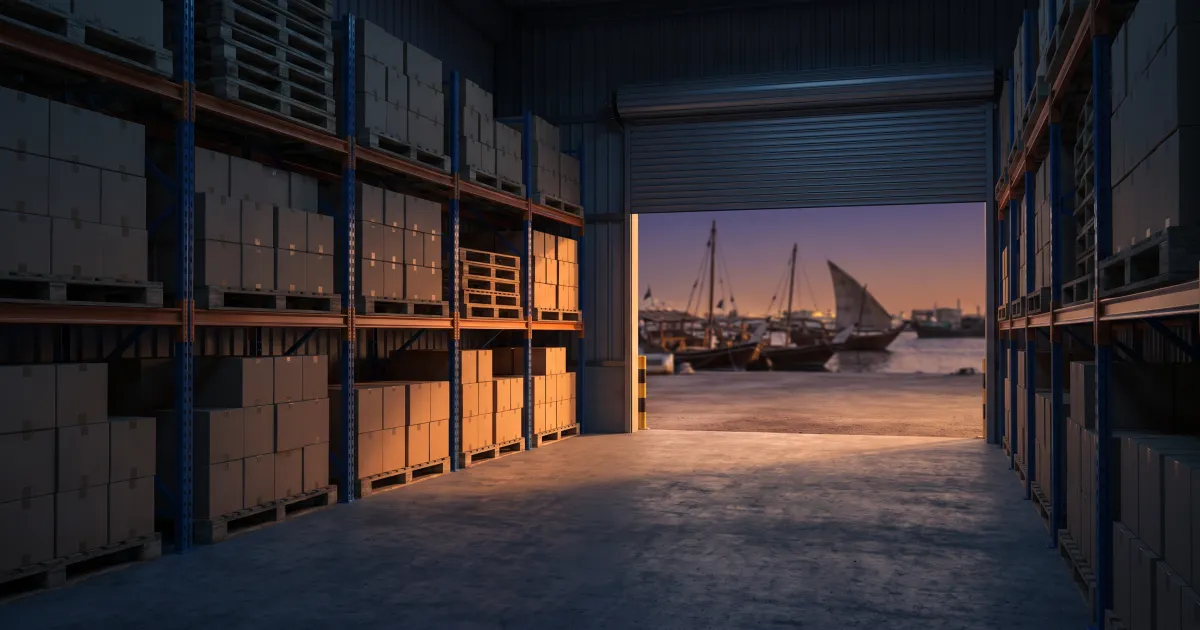
Direct answer. A general trading licence in Dubai lets you import, trade and re-export any goods that are allowed in the UAE, under one activity instead of a list of separate product lines. It does not let you trade everything. On the official Department of Economy and Tourism (DET) record, activity 4690018 "General Trading" covers "any of the allowed goods", and goods whose trade needs special approval can be traded under it only "upon obtaining NOC from the competent departments". So the answer has three parts. Ordinary goods: yes, under the one activity. Regulated goods such as medicines, cosmetics, telecom devices, food or pesticides: only after the authority that regulates them issues its no-objection certificate (NOC) or permit. Prohibited goods and counterfeits: never. Activity codes, approval lists and requirements can change, so confirm the current record with DET before you apply.
Activities under a general trading licence: what the DET record covers
Every mainland licence in Dubai lists one or more business activities, and the activity decides what you may do and which approvals apply. The UAE Government portal says the business activity "is the basis for selecting the legal form and type of licence", and there are "more than 2,000 business activities to choose from in the UAE".
The official record for general trading sits in the Invest in Dubai business activity search, which DET runs. At the time of writing, the record shows:
- Name and code: General Trading, activity code 4690018.
- Scope: "Includes commercial firms engaged in importing, trading and re-exporting of any of the allowed goods, the trading activities that need special approvals, can also be traded under this activity upon obtaining NOC from the competent departments."
- Legal forms: Limited Partnership, General Partnership, Sole Establishment, one-person LLC and LLC.
- Licence types: Business Licence, Instant Licence and SME Licence.
- Regulator and law: DET, under Dubai Law No. (6) of 2023 Establishing the Dubai Business Registration and Licensing Corporation.
In practice, the activities under a general trading licence cover goods that are on neither the customs restricted list nor the prohibited list. Furniture, clothing and footwear, non-electrical kitchenware, and bags and luggage, for example, do not appear on either list as Abu Dhabi Customs publishes them. Check every product in the ICP tariff system anyway, because a specific item can still carry its own permit requirement (see below).
That law affiliates the licensing corporation to DET (Article 3). It also gives the corporation the duty to regulate the licensing of economic establishments in Dubai and their registration in the Commercial Register (Article 6(4)). Full text: Dubai Law No. 6 of 2023.
A sole establishment and an LLC both qualify, but they carry very different personal liability; see our comparison of sole establishments and LLCs. Codes can also be renumbered, and some websites quote a different code for general trading, so rely on the number shown on the live DET record rather than one copied from elsewhere.
General trading vs a single-line trading activity
Other trading activities on the DET list cover a single product line. General trading replaces a stack of those with one broad activity, which is why people choose it and why they misread it. Three records from the portal show the difference:
| Activity (code) | What the record covers | Regulator named on the record |
|---|---|---|
| General Trading (4690018) | Importing, trading and re-exporting any allowed goods; approval-needing goods only with an NOC | DET |
| General Trading Wholesalers (4690103) | Wholesale resale to retailers and to industrial, commercial and professional users; "exclusively available to firms intending to practice wholesaling in warehouses" | DET |
| Medicinal Chemicals Trading (4772003) | One regulated product line | Dubai Police |
A single-line activity for a regulated product brings its regulator into the licensing file from the start. The General Trading record does not name those regulators, but the approval duty does not disappear. It moves to the goods: each regulated product needs its own approval before you trade it.
If you will hold stock in a warehouse and sell mainly to other businesses, read the wholesalers record first. For small-scale home or online selling, see our guide to the e-trader licence in Dubai.
Which goods still need another authority's approval
Two official lists answer this, at different levels.
1. DET's additional-approvals list (sector level). Invest in Dubai publishes an additional approvals list for mainland companies. It says that "for certain sectors including food and beverages, healthcare, aviation, education, communication, transportation and insurance, additional No-objection Certificates and documents are required". The pairs most relevant to trading include:
- healthcare, biotechnology and pharmaceuticals: Dubai Health Authority or Dubai Science Park;
- telecommunication activities: the TDRA;
- agriculture and veterinary activities: the Ministry of Climate Change and Environment;
- publishing and media: the list still names the National Media Council. Since 1 January 2026, the National Media Authority has taken over the UAE Media Council's competences under Federal Decree-Law No. (11) of 2025, Article 13, so confirm the current media approver with DET.
Our post on adding activities covers this list under activities that need another regulator's approval.
2. The customs restricted and prohibited lists (goods level). UAE customs authorities apply the GCC Common Customs Law. Abu Dhabi Customs publishes the definitions on its restricted and banned commodities page:
- Prohibited goods are goods "whose import and export are banned under the Common Customs Law of the GCC States, or any other law or regulation applicable in the UAE".
- Restricted goods "need prior approval from the authorities concerned prior to import or export".
The same page names an approving authority for each restricted category. Examples:
| Restricted goods | Authority named |
|---|---|
| Live animals and animal products; pesticides and fertilisers | Ministry of Climate Change and Environment |
| Weapons and ammunition; fireworks and explosives | Ministry of Interior |
| Wired and wireless communication devices, GPS devices | TDRA |
| Non-medicinal cosmetics, skincare, oral and dental care products; e-cigarettes and e-shisha | Ministry of Industry and Advanced Technology |
| Medicines, pharmaceutical preparations and medical devices | Ministry of Health and Prevention |
| Publications and recorded media | National Media Authority (the customs page still says UAE Media Council; Federal Decree-Law No. (11) of 2025, Article 13, moved its competences to the Authority from 1 January 2026) |
| Rough diamonds | Kimberley Process / Dubai Multi Commodities Centre |
| Radioactive materials | Federal Authority for Nuclear Regulation |
Vehicles, new tyres, household electrical appliances and tobacco are also restricted. Food is restricted too, but that page names an Abu Dhabi body for it. For food imports into Dubai, the approving body is set by the relevant authorities and can change; confirm it with Dubai Customs or a licensed UAE lawyer before you order stock.
For one specific product, search the ICP Central Customs Tariff System by description or HS code. It lists restricted or prohibited commodities "with details on required permits and responsible authorities".
Three limits a general trading licence does not remove
Three limits catch traders most often.
Prohibited goods stay prohibited. No NOC exists for them. The customs list gives examples such as narcotics, counterfeit and fake currency, gambling tools and machines, ozone-depleting substances, asbestos sheets and pipes, hazardous waste, and used or refurbished tyres.
Counterfeits are banned outright. Federal Decree-Law No. (42) of 2023 on Anti-Commercial Fraud, Article 4(1), prohibits importing, exporting, producing, displaying, selling, storing, transporting, marketing or trading in counterfeit goods, or possessing them, for the purpose of selling. See the text on the anti-commercial fraud law page. Counterfeit stock is not an allowed good under any activity.
Registered commercial agencies block parallel imports. Under Federal Law No. (3) of 2022 Regulating Commercial Agencies, Article 20(1), goods that are the subject of a commercial agency registered with the Ministry "may not be entered for the purpose of trading by means other than the Agent". Customs may not release such imports brought in by anyone else, "except with the approval of the Ministry or the Agent". A general trading licence does not change this. Before you import a branded product, check whether a registered agent holds it. Read the Commercial Agencies Law and our guide to UAE commercial agency law.
Also check foreign ownership. Invest in Dubai says "most activities now allow 100% foreign ownership, although some may require an Emirati partner, depending on the business type". The General Trading record carried a foreign-ownership marker at the time of writing, while some specialist trading lines did not. Confirm the position with DET for your legal form.
How to get general trading on your licence
- Read the live record. Search "General Trading" in the DET activity search. Note the code, scope, legal forms and licence types shown on the day.
- List your goods, then check each one. Run each product through the ICP tariff system and the DET additional-approvals list. Mark every item that needs an NOC or permit, and the authority that issues it.
- Choose the legal form. The record allows sole establishments, partnerships, one-person LLCs and LLCs. For the wider setup sequence, see how to register a company in Dubai.
- Choose Normal or Instant. Invest in Dubai says a Normal Licence needs a Memorandum of Association and "a site lease contract", plus other agencies' approvals if required. An Instant Licence is issued "within five minutes" for activities "that do not require external approvals beyond the Department of Economy and Tourism", with a virtual business site for the first year only, "after which a valid business location must be provided upon renewal or any amendments". If your plan depends on regulated goods, ask DET which route suits your file.
- Get the product approvals. Obtain each NOC or permit from the authority named for that product before you import or sell it.
- Keep the licence current. Adding activities or changing capital later needs an amendment; Invest in Dubai lists modifying business activities and changing capital among common licence modifications. Our guide to adding a business activity walks through it, and our trade licence renewal guide covers renewal, including the location requirement.
If you are still choosing between activities, the LEXAI answer on how to choose the right business activity is a short starting point.
Mainland versus free zone general trading
A DET licence and a free zone licence come from different authorities. Dubai Law No. (6) of 2023 treats free zone authorities as separate licensing entities: Article 6 has the licensing corporation coordinate licensing policy with them, and Article 7(b) lets "an entity supervising the licensing of the conduct of Economic Activities, including any free zone authority" outsource licensing functions, including issuing permits, to the corporation by agreement. In practice, a free zone company is licensed under its own free zone's activity list and rules, not under the DET record.
Free zone activity names differ. DMCC, a Dubai Government free zone authority, describes its "commercial licence" as "ideal for broader trading activities, including the buying and selling of multiple product categories under one licence", and notes that "some activities may require additional approvals from external authorities". Approval requirements from outside authorities can still apply inside a free zone; confirm the position for your products with your free zone authority.
Selling into mainland Dubai is the other difference. Invest in Dubai describes a Free Zone Branch Licence that "enables establishments licensed in Dubai free zones to conduct their activities outside the free zone and within the Emirate", valid for one year and renewable, with a permit valid for six months. That licence is one official route. Whether your free zone company needs it, or a mainland distributor, to sell to mainland customers depends on your activity, so confirm with DET and your free zone authority. See the LEXAI answer on whether a free zone company can trade directly in the mainland market and our mainland vs free zone comparison.
Cost, capital and premises: what is fixed and what is not
Many websites quote a fixed minimum capital, office size and fee range for general trading. We could not find those figures on the official DET record or the Invest in Dubai pages.
- Fees. Invest in Dubai says fees "vary depending on the type of licence and specific activities". The exact figure is set by DET and can change; confirm the current value with DET or a licensed UAE lawyer.
- Capital. For an LLC (including a one-person LLC), Federal Decree-Law No. (32) of 2021 on Commercial Companies, Article 76(1), requires "sufficient capital to achieve the object of its incorporation" and lets the Cabinet set a minimum by resolution. See the Commercial Companies Law. Any capital figure for general trading is set by DET or the free zone authority and can change; confirm the current value with the licensing authority or a licensed UAE lawyer.
- Premises. A Normal Licence needs a site lease contract; an Instant Licence starts with a virtual site for the first year only. Any size or warehouse requirement is set by the licensing authority, so confirm it before you sign a lease.
- Timing. The official pages give five minutes for an Instant Licence and ten minutes to complete an amendment. Product approvals from other authorities run on their own timelines.
Customs duty is separate. The UAE Government portal says tariffs "range from 0 to 5 per cent", with higher rates for alcohol and cigarettes; confirm your rate with customs.
Common mistakes, and where to go next
- Reading "general" as "anything". The record says "allowed goods". Regulated goods need an NOC. Prohibited goods and counterfeits are never allowed.
- Ordering stock before checking it. Restricted goods need the approval before import, not after the container lands.
- Choosing the wrong general trading record. The wholesalers record is limited to wholesaling in warehouses.
- Importing someone else's agency brand. A registered commercial agency can stop customs from releasing your shipment.
- Copying codes or figures from unofficial sites. Rely on the live DET record.
- Forgetting the instant licence's location step. The virtual site covers the first year only.
You can check existing licence and activity details in the UAE National Economic Register on u.ae, and look up terms such as trade licence and free zone licence in the LEXAI dictionary. If your goods list includes regulated products, or a brand's agent has objected to your imports, you can compare corporate and commercial lawyers on LEXAI.
This is general legal information, not legal advice. Confirm current procedure with the relevant authority or a licensed UAE lawyer.
Last updated 9 October 2026
Frequently Asked Questions
Ask a UAE lawyer
Asking is free, and you don't need an account.
Talk to a Corporate / Commercial lawyer in the UAE
Browse UAE lawyers ready to help with your matter.

Corporate Commercial, Criminal Law +8
I am a lawyer and legal consultant practicing in the United Arab Emirates with Dr. Ahmed Al Maamari Advocates & Legal Consultants, providing professional legal services and advice to both individuals and businesses, with a strong focus on protecting clients’ rights and delivering practical and effective legal solutions. My practice focuses on corporate and commercial disputes, cheque-related cases, debt recovery and financial claims, civil litigation, fraud and financial crime cases, as well as the drafting and review of contracts, agreements, legal memoranda, and other legal documents. I approach every matter with careful attention to its facts, documents, and available evidence in order to develop an appropriate legal strategy tailored to the client’s interests. I am committed to professionalism, confidentiality, accuracy, and diligent representation throughout every stage of the legal process.
Contact for fees

Family Law, Criminal Law +8
(Al-Hesn Legal Consulting) office is considered one of the offices specialized in providing comprehensive legal services to individuals and companies, as we are keen to provide precise and effective legal solutions that comply with the laws and regulations applicable within the United Arab Emirates. We also have a team of legal advisors with high expertise and efficiency, and legal knowledge acquired through years of experience in all branches of law, including civil, commercial, criminal, labor law, and personal status, which enables us to provide reliable consultations that meet our clients’ needs with high efficiency. We also have a team of legal advisors with high expertise and efficiency, and legal knowledge acquired through years of experience in all branches of law, including civil, commercial, criminal, labor law, and personal status, which enables us to provide reliable consultations that meet our clients’ needs with high efficiency.
AED 250 / per consultation

Civil Litigation, Criminal Law +8
Mohammad Yasser Kassem is a legal consultant at Othman Almarzooqi Advocates and Legal Consultations in Dubai, registered with the Dubai Legal Affairs Department, and founder of KASSEM & Co. He has more than 10 years of experience in the UAE, focusing on litigation, family law, and commercial matters. He represents individuals and businesses in disputes before the UAE courts, holds a law degree, is a member of the Egypt Bar Association, and works in Arabic and English.
AED 750 / per consultation

Founder of LEXAI
Milad Mevlevi is the founder of LEXAI, a bilingual legal directory for the UAE. He studied International Business at the University of Salford. The idea for LEXAI grew out of his own experience seeking legal help in 2022. Searching for “lawyers near me” brought up listings, but he struggled to find verifiable credentials, reviews he could trust and detailed biographies that would help him choose a lawyer with confidence. That experience led him to create LEXAI, with the aim of making it easier for people to assess legal professionals before contacting them.