


جدول المحتويات
Non-Muslim residents and asset-owners in the UAE can register a will with the DIFC Wills Service to ensure their UAE assets pass according to their own wishes rather than the default Sharia-based intestacy rules. The DIFC registry is recognised across all seven Emirates for non-Muslim testators and offers several will templates covering property, business shares, money in UAE bank accounts, and the guardianship of minor children. This guide walks through eligibility, the 2026 registration steps, asset coverage, common drafting mistakes, and what to expect at the appointment.
Direct answer. Yes — any non-Muslim adult with assets or minor children in the UAE can register a will with the DIFC Wills Service, established under the DIFC's Wills and Probate Registry framework. Registration converts a private testamentary document into a publicly enrolled instrument that the DIFC Courts can probate after death. This post covers (1) who qualifies and which will type fits which estate, (2) the registration process step by step, and (3) what registration actually protects — and what it does not.
What a DIFC will is and why it exists
A DIFC will is a written, witnessed testamentary document registered with the DIFC Wills Service, a joint initiative of the DIFC Courts and the Government of Dubai. It allows non-Muslims to elect that their UAE estate is distributed under common-law style "freedom of testation" rather than the default Federal forced-heirship regime that the UAE Civil Code and Personal Status Law apply where no valid will exists.
The registry exists because, without an enrolled will, a deceased non-Muslim's UAE assets are frozen pending probate and may be distributed by formula — fixed shares to spouse, parents, and children determined by the court rather than the deceased. For expatriate families with non-traditional structures (second marriages, dependent siblings, unmarried partners, or charitable gifts), the default distribution rarely matches intent. The DIFC framework is opt-in: it only applies if you affirmatively register.
The DIFC Wills Service launched as a Dubai-only initiative and was later expanded by Cabinet Resolution to allow non-Muslims to register wills covering assets across all UAE Emirates. See the DIFC Courts' own description of the registry's scope and recognition.
Need help drafting or updating your DIFC will?
Browse UAE family and private-client lawyers who handle DIFC will drafting, mirror wills, and cross-border estate planning. No signup required — reach out directly through each lawyer's LEXAI profile.
Find a DIFC will lawyerWho can register a DIFC will
The eligibility test is set out in the DIFC Wills and Probate Registry Rules. To register you must be:
- Non-Muslim. The registry is restricted to non-Muslim testators. Muslim testators are governed by Federal Personal Status Law and the Sharia courts, with limited testamentary freedom.
- An adult of legal capacity at the time of registration.
- Have UAE-situated assets or minor children resident in the UAE. A foreign-resident expat with Dubai property or a UAE bank account qualifies; you do not need a UAE residence visa to register.
- Of sound mind, with the legal capacity to make a will.
The registry offers several will types. The two used most often are the full will, which covers all UAE-situated movable and immovable assets including bank accounts, vehicles, business shares and personal effects, and the property will, which is limited to a capped number of UAE real-estate titles. The Wills Service also publishes a guardianship will (for parents wanting to appoint guardians for minor children only), a financial assets will, a business owners will, and a virtual assets will covering crypto-assets and similar holdings.
For a fuller walk-through of the choice between a DIFC will and a notary-attested will for non-Muslims, see our companion guide on the non-Muslim will options in Dubai.
How the DIFC registration process works in 2026
Registration follows a five-step sequence. The process is administered by the DIFC Wills Service, which sits within the DIFC Courts complex in Gate Village, with Abu Dhabi registration available through approved channels and via approved virtual-registration appointments.
- Choose your will type. Decide whether you need a full will, property will, guardianship will, or one of the specialist products. The choice depends on whether you want to cover all UAE assets or only specific categories such as Dubai freehold property.
- Draft the will. You can use a Wills Service draftsperson or instruct an independent UAE lawyer. The will must be in English, comply with the Wills and Probate Registry Rules format, and identify executors, beneficiaries, and (if applicable) guardians for minors.
- Book a registration appointment. Appointments are booked online through the DIFC Wills Service portal. Both in-person registration at the DIFC and remote video-registration appointments are offered.
- Attend the appointment. The testator attends in person (or by approved video link) with original photo identification. The will is signed in the presence of a Wills Service Registry Officer who acts as the witnessing authority. A spouse who is also registering a "mirror will" attends a separate appointment.
- Pay the registration fee. Fees are payable to the DIFC Courts at registration.
After registration, the original will is stored in the DIFC Wills Registry. Beneficiaries do not receive a copy automatically; the testator can choose whether to share copies privately.
What the registry covers — and what it does not
A DIFC will covers UAE-situated assets only. It does not displace the law of the deceased's home country for assets outside the UAE. A British testator with a Dubai apartment, a UK pension, and a Swiss bank account will need the DIFC will for the Dubai property and a home-country will or estate plan for the UK and Swiss assets.
Within the UAE, the registered will governs:
- Real estate registered in the testator's name in any Emirate, subject to the specific will type chosen.
- Money in UAE bank accounts and investment accounts.
- Shares in UAE-registered companies, including mainland LLCs, free-zone entities, and DIFC-incorporated companies.
- Vehicles, jewellery, art, and other movable personal property situated in the UAE.
- Guardianship appointments for minor children resident in the UAE.
The registry does not override:
- Joint-tenancy or survivorship arrangements already attached to a bank account or property title — those pass automatically to the surviving co-owner.
- Insurance policy beneficiary nominations — a life insurance pay-out follows the policy nomination, not the will.
- Pension nominations under UAE end-of-service or DIFC Employee Workplace Savings (DEWS) — those follow the nominated beneficiary form filed with the plan administrator.
Common drafting and registration mistakes
Several issues recur when wills are challenged at probate. Avoiding them costs nothing at registration but is expensive to fix posthumously.
- Leaving the matrimonial home to a spouse alone without dealing with the mortgage. UAE mortgages do not automatically discharge on death; the will should direct how the loan is settled.
- Naming an executor who is non-resident with no UAE entry rights. A foreign executor must be able to travel to the UAE to administer the estate; consider a co-executor based locally.
- Forgetting to update the will after a property purchase, divorce, or birth of a child. The registered will is a snapshot at the date of signing. A subsequent property purchase outside the original schedule may fall outside the will's coverage.
- Mixing UAE and non-UAE assets in a single document. A DIFC will should restrict itself to UAE assets; foreign assets should be covered by a will valid in the country where they are situated.
- Using "mirror wills" without independent legal advice for each spouse. Each testator's will is a separate legal document; both should be reviewed independently before signing.
Costs, timelines, and amending or revoking the will
The DIFC Wills Service publishes a fixed fee schedule for each will type and discount packages for mirror wills (where spouses register substantively identical wills).
Registration itself, once the will is drafted and the appointment is booked, is typically completed in a single appointment session. The drafting stage — particularly for full wills covering complex estates — usually takes longer and depends on how quickly the testator returns the questionnaire and any clarifications.
To amend a registered DIFC will, the testator either registers a codicil (a short amending document) or revokes the existing will and registers a new one. Revocation can be done by registering a new will that expressly revokes the prior one, by a written revocation lodged with the Registry, or — under common-law principles incorporated into the DIFC Rules — by physical destruction of the original with the intention of revoking. Marriage or divorce does not automatically revoke a DIFC will; the testator must act.
When to involve a UAE lawyer
DIY drafting is possible for simple estates, but a UAE lawyer who handles probate work is worth engaging where the estate involves: a family business or shareholding, more than one property across multiple Emirates, blended families, a non-UAE spouse, children from a prior relationship, or significant assets in multiple jurisdictions. A lawyer can also coordinate the DIFC will with a home-country will so that the two do not accidentally contradict each other.
For directory access to UAE practitioners who handle DIFC will drafting and cross-border estate planning, browse family and private-client lawyers on LEXAI. If you want general questions answered first, the LEXAI AI assistant gives free information on the DIFC framework, the documents you'll be asked to bring, and how mirror wills work.
Frequently asked questions
Who is eligible to register a will with the DIFC Wills Service?
Any non-Muslim adult who has assets in the UAE or a minor child resident in the UAE is eligible to register. You do not need a UAE residence visa — non-resident foreigners who own a Dubai apartment or a UAE bank account also qualify. Muslim testators are not eligible because their estates are governed by Federal Personal Status Law and the Sharia courts, which apply a different testamentary regime.
Does a DIFC will cover assets in Abu Dhabi and the other Emirates?
Yes. Although the registry sits within the DIFC Courts in Dubai, the DIFC will framework was extended to cover non-Muslims' UAE-situated assets across the Emirates by Cabinet Resolution. A DIFC will can therefore validly dispose of property in Abu Dhabi, Sharjah, Ras Al Khaimah and elsewhere in the UAE, provided the testator and asset categories meet the registry's eligibility rules.
How much does it cost to register a DIFC will in 2026?
The DIFC Wills Service publishes a fixed fee schedule that differs by will type — single, mirror (spouses registering together), full, property-only, guardianship and specialist variants each have their own price. Mirror-will packages are typically discounted compared with two separate single-will registrations.
Can I register a DIFC will from outside the UAE?
The DIFC Wills Service offers a virtual registration option in addition to in-person appointments at the DIFC, which allows the testator to attend the signing by approved video link. This is helpful for non-resident property owners and for testators travelling between countries.
Does a DIFC will cover crypto-assets, business shares and joint accounts?
Crypto-assets and similar virtual holdings can be covered through the DIFC's virtual assets will product or by inclusion in a full will, depending on the structure of the holding. Business shares in UAE-registered companies fall within the standard full-will coverage. Joint accounts held in survivorship form pass automatically to the surviving holder and are not redirected by the will, regardless of how the will is drafted.
Does a DIFC will replace the need for a will in my home country?
No. A DIFC will governs UAE-situated assets only. Assets outside the UAE — bank accounts, pensions, real estate, investments — should be covered by a will valid in the country where they are situated. Most cross-border families need both a DIFC will for their UAE assets and a home-country will, drafted to make sure the two documents do not conflict.
What happens if a non-Muslim dies in the UAE without a DIFC will?
If no will is registered, the deceased's UAE assets are administered under the default rules in the Federal Civil Code and Personal Status Law. The court typically distributes the estate in fixed shares to surviving heirs in a defined order — spouse, children, parents, siblings — rather than according to the deceased's wishes. The estate is also frozen pending the court's probate process, which can delay access for surviving family members.
Can a DIFC will be challenged after death?
Yes. A registered will can be challenged on the same grounds that apply to any testamentary document — lack of capacity at signing, undue influence, fraud, or failure to comply with formalities. Probate of a DIFC will is heard before the DIFC Courts under its own procedural rules. Registration with the DIFC Wills Service raises the evidentiary bar for a challenge but does not make the will challenge-proof.
If you want to talk to a UAE lawyer about drafting or updating a DIFC will, browse the LEXAI directory of family and private-client practitioners. For free preliminary questions about the registration process, the LEXAI AI assistant answers in plain English.
This is general legal information, not legal advice. Confirm current procedure with the relevant authority or a licensed UAE lawyer.
آخر تحديث 2 أكتوبر 2026
الأسئلة الشائعة
اسأل محامياً في الإمارات
السؤال مجاني، ولا تحتاج إلى حساب.
تحدّث إلى محامٍ متخصّص في قانون الأسرة
تصفّح محامين في الإمارات جاهزين لمساعدتك في قضيتك.

Corporate Commercial, Criminal Law +8
I am a lawyer and legal consultant practicing in the United Arab Emirates with Dr. Ahmed Al Maamari Advocates & Legal Consultants, providing professional legal services and advice to both individuals and businesses, with a strong focus on protecting clients’ rights and delivering practical and effective legal solutions. My practice focuses on corporate and commercial disputes, cheque-related cases, debt recovery and financial claims, civil litigation, fraud and financial crime cases, as well as the drafting and review of contracts, agreements, legal memoranda, and other legal documents. I approach every matter with careful attention to its facts, documents, and available evidence in order to develop an appropriate legal strategy tailored to the client’s interests. I am committed to professionalism, confidentiality, accuracy, and diligent representation throughout every stage of the legal process.
تواصل لمعرفة الأتعاب

International Arbitration, General +8
Dr. Ibrahim Hassan Al Mulla is the founder of Azza Ebrahim Hasan Al Mulla Advocates and Legal Consultants (formerly Ebrahim Hasan Al Mulla & Partners), a UAE law firm licensed in Dubai since 1995 (Commercial License No. 129252) with three offices across the UAE and a team of more than 60 lawyers. He practises as an arbitrator and lectures at judicial academies and universities in the UAE. The firm's work spans legislation and law drafting, government and administrative matters, governance, banking, commercial, defence, construction, and dispute resolution, acting for government entities, corporates, multinationals, state-owned enterprises and financial institutions. He is a member of the UAE Bar Association, the Arab Arbitration Committee, and UNCITRAL.
2,100 درهم / لكل استشارة

Civil Litigation, Criminal Law +8
Mohammad Yasser Kassem is a legal consultant at Othman Almarzooqi Advocates and Legal Consultations in Dubai, registered with the Dubai Legal Affairs Department, and founder of KASSEM & Co. He has more than 10 years of experience in the UAE, focusing on litigation, family law, and commercial matters. He represents individuals and businesses in disputes before the UAE courts, holds a law degree, is a member of the Egypt Bar Association, and works in Arabic and English.
750 درهم / لكل استشارة
مؤسس LEXAI
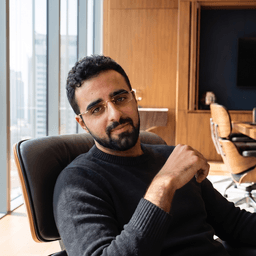
ميلاد مولوي هو مؤسس LEXAI، وهو دليل للمهنيين القانونيين في دولة الإمارات متاح بالعربية والإنجليزية. درس الأعمال الدولية في جامعة سالفورد. نشأت فكرة LEXAI من تجربته الشخصية في البحث عن مساعدة قانونية عام 2022. كان البحث عن «محامين بالقرب مني» يعرض له قوائم بأسماء محامين، لكنه واجه صعوبة في العثور على مؤهلات يمكن التحقق منها، وتقييمات يمكنه الوثوق بها، ونبذات مهنية مفصّلة تساعده على اختيار محامٍ بثقة. دفعته هذه التجربة إلى تأسيس LEXAI، بهدف تسهيل تقييم المهنيين القانونيين قبل التواصل معهم.