

Real Estate Law
17 مايو 202617 دقائق قراءة

Dubai Tenancy Disputes: The RERA Process Explained (2026)

بقلم LEXAI Team

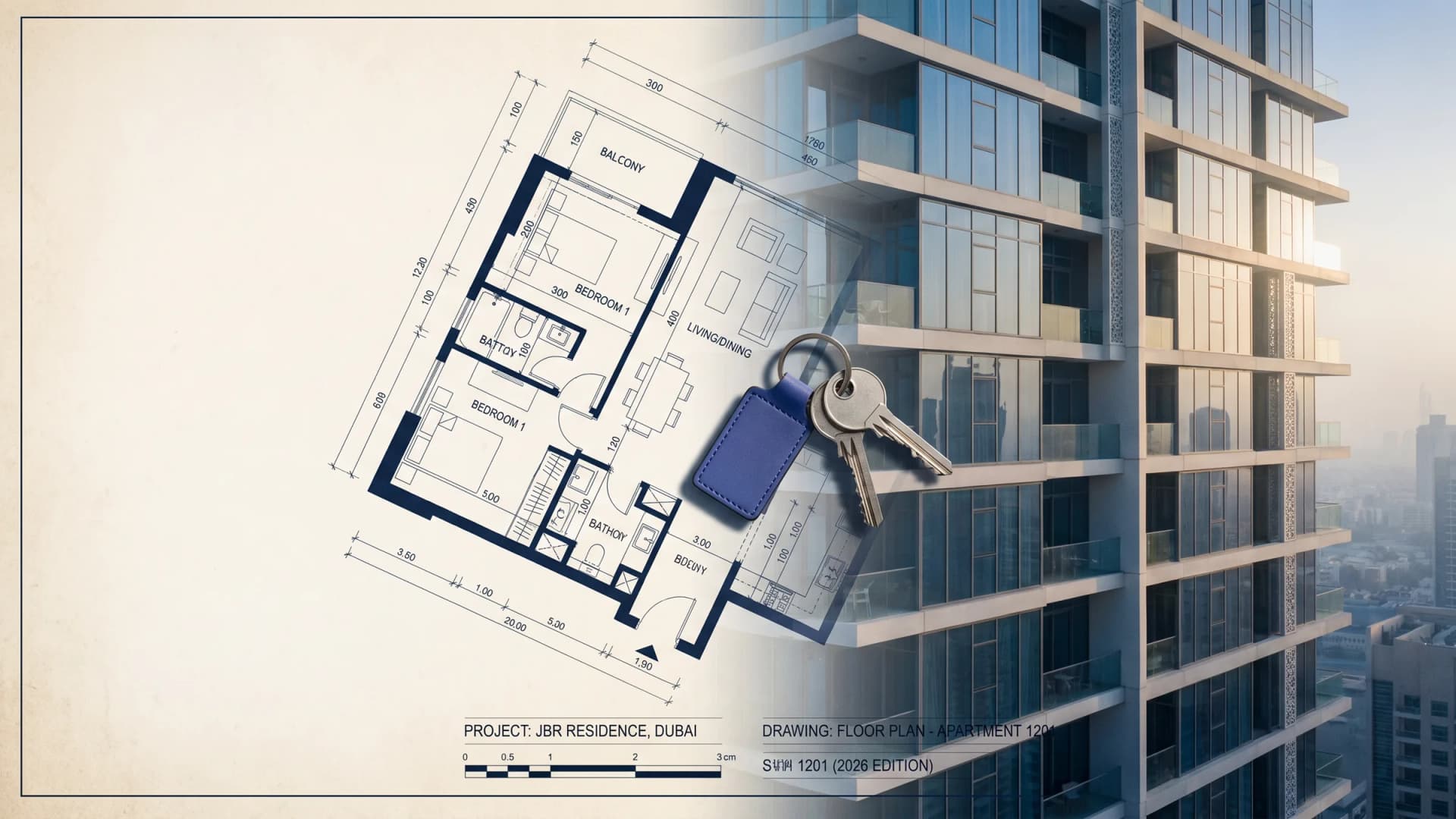
Real estate law: Dubai apartment blueprint fades into golden-hour residential tower with keys at the seam. Dubai tenancy dispute RERA process.

By LEXAI Editorial · Reviewed by a Dubai-qualified real estate advocate · Published 2026-05-17 · Updated 2026-05-17 · 17 min read

Your landlord just slid an eviction notice under the door. The renewal letter says rent is going up 35%. Your security deposit hasn't come back six weeks after you moved out. These are the three most common tenancy fights in Dubai, and they all end in the same place — the Rental Disputes Settlement Centre (RDSC), the special court that handles every rental case in the emirate. The rules are tighter than most tenants think, and tighter than most landlords admit.

The 60-second version

- Dubai rental disputes are governed by Law No. 26 of 2007 and its amendment Law No. 33 of 2008, plus Decree No. 26 of 2013 which created the Rental Disputes Settlement Centre (RDSC).

- RDSC filing fee is 3.5% of the annual rent, with a minimum of AED 500 and a maximum of AED 20,000.

- Eviction at renewal needs 12 months' written notice through a notary or registered mail — verbal warnings don't count.

- Rent increases are capped by the RERA Rental Index — most tenants are entitled to 0% to 20% above the area average, not whatever the landlord asks.

- Most cases are decided within 30 days at first instance; appeals add 15 to 30 days.

What this article covers

  1. What counts as a tenancy dispute in Dubai
  2. Why this matters under UAE law
  3. How the RERA Rental Index actually works
  4. The 12-month notice rule, in plain English
  5. Eviction grounds the landlord must prove
  6. How to file at the RDSC — step by step
  7. Mediation versus adjudication
  8. Getting your security deposit back
  9. Costs and timeline expectations
  10. When to hire a lawyer
  11. FAQ

Get straight answers to your tenancy question

Rent jump, eviction notice, deposit not returned — these are the cases verified UAE lawyers handle every week. Ask the free AI assistant first, or browse Dubai real-estate lawyers directly.

Ask the AI Assistant

Free to ask — no signup required


What is a Dubai tenancy dispute?

A tenancy dispute in Dubai is any disagreement between a landlord and a tenant about a residential or commercial lease registered in the emirate. The Rental Disputes Settlement Centre — RDSC for short, set up under Decree No. 26 of 2013 — has exclusive jurisdiction over these cases. You can't take a Dubai rental case to the regular Civil Court, and you can't ignore the RDSC's decision and hope a higher court takes a different view.

The five fights that fill the RDSC's docket:

  • The landlord wants you out before the lease ends, or refuses to renew without 12 months' notice.
  • The landlord raised rent more than the RERA Index allows.
  • The security deposit didn't come back, or came back short.
  • The landlord skipped maintenance the contract requires.
  • The tenant stopped paying rent or breached the lease another way (yes, landlords file too — usually after a tenant goes silent).

Most cases settle in mediation. The ones that don't go to a judge, who reads the file, hears both sides briefly, and issues a binding decision.


Find a verified Dubai tenancy lawyer

Real-estate disputes in Dubai are technical — the 12-month notice rule, RERA Index math, and RDSC procedure trip up tenants and landlords alike. Verified UAE real-estate advocates on LEXAI handle these cases every week. Browse, message directly, no signup required.

Find Real Estate Lawyers

Why this matters under UAE law

Three laws do the heavy lifting:

Dubai Law No. 26 of 2007 ("Regulating the Relationship between Landlords and Tenants in the Emirate of Dubai") is the foundation. It defines a landlord, a tenant, a lease, and the basic obligations on each side. If you've ever signed a Dubai tenancy contract — the kind you upload to Ejari — you've already lived under this law.

Dubai Law No. 33 of 2008 amends Law 26/2007. The amendment is what tenants actually care about: it added the 12-month notice rule for eviction at renewal, narrowed the grounds a landlord can use, and set out what a valid eviction notice has to contain. Without Law 33/2008, a landlord could refuse to renew with 90 days' notice. With it, that landlord needs a year — and a real reason.

Dubai Decree No. 26 of 2013 created the RDSC and the procedural rules. It says mediation comes first, sets the filing fee at 3.5% of annual rent (capped, see below), and lays out the appeal process.

Two more sit alongside them. Law No. 26 of 2007 as amended by Decree No. 43 of 2013 governs how much rent can go up at renewal — this is the law behind the RERA Rental Index. And the Dubai Land Department (DLD) runs Ejari, the mandatory tenancy-registration system. Without an Ejari certificate, you can't file at the RDSC. So step one of any dispute is making sure your contract is registered.

Note on jurisdiction: this article is about Dubai onshore tenancies. DIFC has its own rules. So does Abu Dhabi (Tawtheeq instead of Ejari, different rental committee). Don't apply this guide to a flat in Reem Island.


How the RERA Rental Index actually works

The Dubai Land Department publishes the RERA Rental Index — a real-time calculator that gives an "average market rent" for every building or area in Dubai based on registered Ejari contracts. The calculator lives on the DLD app and at dubailand.gov.ae. It is the only legally accepted reference for renewal increases.

Decree No. 43 of 2013 spells out exactly how much rent can go up at renewal, and it's a sliding scale tied to how far the current rent sits below the RERA Index average:

  • Current rent within 10% of the RERA average → no increase allowed. Zero.
  • Current rent 11% to 20% below the average → up to 5% increase.
  • Current rent 21% to 30% below the average → up to 10% increase.
  • Current rent 31% to 40% below the average → up to 15% increase.
  • Current rent more than 40% below the average → up to 20% increase.

That's the ceiling. The landlord can ask for less, never more. And it only applies at renewal — not mid-lease. If a landlord tries to raise rent in month four of a 12-month contract, the answer is no, full stop.

Worked example. You're renting a one-bed in Jumeirah Lake Towers (JLT) for AED 75,000. The RERA Index average for a one-bed in that tower is AED 82,000. Your current rent is about 8.5% below the average → that's inside the 10% band → 0% legal increase. If your landlord asks for AED 95,000 at renewal, that demand is unlawful and the RDSC will rebuff it.

Second example. Same flat, but you're paying AED 60,000 against an AED 82,000 average. You're 27% below the average → that's the 21-30% band → up to 10% legal increase, so AED 66,000. The landlord cannot push past that even if "the market has moved."

One catch. Even if the increase is legal under the formula, the landlord still has to give 90 days' written notice before renewal. No notice on time means rent stays the same for another year.


The 12-month notice rule, in plain English

This is the rule landlords most often try to get around, so it's worth slowing down on. Law 33/2008 says a landlord who wants the tenant out at the end of the lease — eviction for the landlord's own reasons, not for a tenant breach — must give 12 months' written notice delivered through a notary public or registered mail.

What that means in practice:

  • Twelve calendar months, not twelve months "give or take."
  • The notice must say why the landlord wants the unit back. Vague is not enough.
  • The reason has to be one of the four grounds listed in Article 25(2) of Law 33/2008 (we'll cover them next).
  • "Delivered through a notary" means a Notary Public attests to the notice — a WhatsApp message or a hand-delivered letter signed by the security guard is not a valid notice.

Tenants get this benefit too. If a tenant wants to leave at renewal, the contract usually requires 60 or 90 days' notice — check yours.

If a landlord skips the 12-month notice and tries to file at the RDSC, the case gets dismissed. If a landlord serves notice but doesn't have one of the four legal grounds, the case also gets dismissed. This is the single most common landlord misstep in Dubai.


Eviction grounds the landlord must prove

Law 33/2008, Article 25, is binary. There are two lists of eviction grounds — one that allows eviction during the lease term (Article 25(1), for tenant breach) and one that allows eviction at the end of the lease term (Article 25(2), for landlord reasons).

Article 25(1) — eviction during the lease (tenant breach). A landlord can ask the RDSC to evict mid-lease if the tenant has:

  • Failed to pay rent within 30 days of a written demand;
  • Used the unit for an illegal purpose, or in a way that violates public morals;
  • Sublet the unit without the landlord's written permission;
  • Caused damage that requires major repair and refuses to fix or pay;
  • Carried out works that materially altered the unit without permission.

Article 25(2) — eviction at the end of the lease (landlord reasons). The landlord must prove one of these four:

  1. The landlord wants to demolish or completely reconstruct the building (and has the necessary permits).
  2. The unit needs major repairs or renovation that cannot be done while occupied (technical report required).
  3. The landlord wants to use the unit personally or for a first-degree relative (spouse, parent, child) — and they must not own another suitable unit in the emirate.
  4. The landlord wants to sell the unit.

That's it. No other reason works. "I want to raise the rent more than the Index allows" is not a ground. "I don't like you" is not a ground. "I got a better offer from another tenant" is not a ground.

And if the landlord wins eviction on ground 3 (personal use) but then re-rents the unit to someone else within two years, the original tenant can sue for compensation. The same compensation right applies to ground 4 if the landlord doesn't actually sell.


Got an eviction notice? Don't sign anything yet.

Most Dubai eviction notices fail on one of two technical points — either the 12-month window or the legal grounds. A verified UAE real-estate lawyer can read your notice and tell you within minutes whether it stands up.

Find Dubai Tenancy Lawyers

Browse verified — no signup required


How to file at the RDSC — step by step

The filing process is the same whether you're the tenant or the landlord. Here's the path from "I have a problem" to "I have a judgment."

Step 1 — Confirm your contract is registered with Ejari. Without Ejari, the RDSC won't accept your case. Download the Ejari app, or visit a typing centre, and pull up the certificate. If it's not there, register it first — the cost is around AED 220 and it takes a day.

Step 2 — Gather your documents. You'll need:

  • A copy of the tenancy contract
  • The Ejari certificate
  • A title deed copy for the property (landlords have this; tenants can request it)
  • Copies of passports and Emirates IDs for both parties
  • DEWA bills (proof of occupancy and utility transfer)
  • Any correspondence with the other party (emails, WhatsApp, formal notices)
  • For rent-cap disputes: a RERA Index printout for the unit
  • For eviction defense: the notice the landlord served
  • For deposit cases: the move-in inspection report and move-out photos

Step 3 — File at the RDSC. Submit the case online at dubailand.gov.ae (Land Department portal → Rental Disputes), at an RDSC service centre, or through a registered legal services typing office. The form is bilingual (Arabic/English). You'll need to translate any non-Arabic documents through a certified legal translator before submission.

Step 4 — Pay the filing fee. 3.5% of the annual rent, with a minimum of AED 500 and a maximum of AED 20,000. On a AED 100,000 annual rent, that's AED 3,500. The fee is refundable if the landlord loses, claimable by the winner in any case.

Step 5 — Wait for case assignment. Within 3 to 7 working days, the case gets a number and an assigned mediator. You'll receive an SMS and an email.

Step 6 — Mediation (15 days, usually). The mediator calls both sides in, separately and together, and tries to settle. If you agree, the settlement is binding and the case closes. About 65% of cases settle here according to RDSC public statistics.

Step 7 — Adjudication, if mediation fails. The case goes to a judge. A short hearing — sometimes only 10 to 20 minutes — and then the judge writes a decision. The first-instance ruling usually arrives within 30 days of mediation failure.

Step 8 — Appeal, if needed. Either side can appeal within 15 days of the first-instance ruling. Appeals are heard by an appellate panel of three judges. Decisions on appeal are final and enforceable. Appeals take roughly 30 to 60 days.

Step 9 — Enforcement. Once final, the judgment goes to the execution court. If a tenant doesn't leave after an eviction order, or a landlord doesn't return a deposit after a refund order, the execution court has tools — including police escort and asset attachment.


Mediation versus adjudication

Mediation is informal, fast, and cheap. The mediator is a senior RDSC officer, not a judge. The mediator's job is to find a settlement both sides can sign, not to decide who's right. Most tenants and landlords walk out of mediation with a written agreement and never see a courtroom.

Adjudication is what happens when mediation fails or one side refuses to attend. A judge reads the file, hears both sides, and issues a binding decision. There's no jury, no extended discovery, no week of hearings — Dubai's rental court is built for speed.

A few tactical points:

  • Attend mediation in person if you can. Cases settle better when both sides are in the same room. Sending a lawyer to mediation is fine; sending no one signals you don't care.
  • Bring a settlement number to mediation. "I want what I'm owed" is not a number. "I'll accept AED 8,500 of the AED 12,000 deposit and drop the rest" is a number.
  • Don't lie to the mediator. They've heard every story. If you damaged the unit, say so and negotiate the repair cost. If the landlord skipped maintenance, document it and bring photos.
  • In adjudication, written evidence wins. The judge has minutes per file. Photos, signed inspection reports, rent receipts, dated WhatsApp screenshots — these move the needle. "He said, she said" doesn't.

Getting your security deposit back

Standard Dubai practice: security deposit is 5% of annual rent for unfurnished and 10% for furnished. On a AED 90,000 unfurnished one-bed, that's AED 4,500. The deposit is held by the landlord and refundable at the end of the lease, less any legitimate deductions.

What counts as a legitimate deduction:

  • Repair of damage beyond normal wear and tear (a hole in the wall, yes; faded paint after four years, no);
  • Unpaid DEWA bills or chiller bills carried over;
  • Cleaning costs if the unit was returned in unreasonable condition;
  • Replacing items documented in the move-in inventory that are now missing.

What does NOT count:

  • Repainting because the landlord wants the unit a different colour;
  • Replacing a kitchen the landlord meant to upgrade anyway;
  • A nebulous "agency fee" or "exit fee" not in the contract;
  • The cost of finding the next tenant.

How to maximise your refund:

  • Do a move-in inspection the day you take possession. Photograph everything — walls, floors, appliances, fixtures. Date-stamp the photos. Email them to the landlord with a written note.
  • Pay all bills before handover. Settle DEWA, chiller, and Etisalat/du through the move-out date.
  • Get final bill clearance from DEWA and submit it with your handover.
  • Do a joint move-out walkthrough. Have the landlord or agent sign a handover note acknowledging the unit's condition.
  • Give the landlord a deadline in writing. Most contracts say the deposit is returned "within 30 days" or "within a reasonable time." 30 days is reasonable. 90 days is not.

If the landlord ignores you, file at the RDSC. Filing fee is the same 3.5% rule, and if you win, the landlord pays your fee plus the deposit plus, in some cases, interest.


Deposit dispute? RDSC handles these in under 45 days on average.

If your landlord hasn't returned your deposit after 30 days, you have a clean case. Real-estate lawyers on LEXAI handle deposit recovery regularly — most resolve in mediation without a courtroom appearance.

Get a Response from Dubai Lawyers

Verified lawyers respond directly


When to hire a lawyer

You can file at the RDSC yourself. The forms are in plain language, the fees are predictable, and the staff will guide you through procedure. Many tenants and landlords self-represent, especially on deposit cases and small rent-cap disputes.

Hire a lawyer when:

  • The amount in dispute is over AED 50,000 and the other side has counsel.
  • You're facing eviction during the lease term (Article 25(1) cases move faster and the consequences hit harder).
  • The case involves commercial property, which has different rules and higher stakes.
  • Multiple units or multi-year disputes are in play.
  • You've already lost at first instance and want to appeal — appeal drafting is technical.

A licensed Dubai real-estate advocate will typically charge AED 5,000 to AED 15,000 for a straightforward residential RDSC case, more for commercial or multi-issue files. Compare that to a deposit you're trying to recover, or the cost of moving out under an eviction order, before deciding.


Costs and timeline expectations

Filing fee: 3.5% of annual rent · minimum AED 500 · maximum AED 20,000.

Document translation: AED 100 to AED 300 per document if originals aren't in Arabic.

Lawyer fees (optional): AED 5,000 to AED 15,000 for residential; AED 15,000 to AED 40,000+ for commercial. Verify before engaging — fees vary by firm and complexity.

Typical timeline:

  • Filing to mediation: 7 to 15 days
  • Mediation period: up to 15 days
  • First-instance judgment: 30 days after mediation fails
  • Appeal: 30 to 60 days
  • Execution: 7 to 30 days after final judgment

End-to-end, a contested case takes about 60 to 90 days from filing to enforceable judgment. Settled cases close in under a month.

All figures as of 2026-05-17. RDSC fees and rules are set by Dubai Decree and updated periodically — check [dubailand.gov.ae](https://dubailand.gov.ae) for current rates before filing.


Common pitfalls to avoid

Skipping Ejari. No Ejari, no RDSC case. If your landlord never registered the contract, you can register it yourself.

Missing the 90-day rent-increase notice. If the landlord didn't tell you in writing 90 days before renewal that rent is going up, rent stays the same. Don't volunteer to pay more "because the market moved."

Accepting a verbal eviction notice. WhatsApp doesn't count. A note from the building manager doesn't count. If it's not through a notary or registered mail, it's not a notice.

Paying rent in cash without receipts. Always pay by cheque or bank transfer with a clear reference. The RDSC asks for proof of payment in every dispute.

Walking out without a handover signature. If you can't get the landlord to sign a handover note, photograph everything on the way out, video the empty unit, and send the photos to the landlord by email the same day.

Talking yourself into accepting a bad settlement at mediation. You don't have to accept the mediator's number. Mediation is voluntary; adjudication exists for a reason.


Frequently asked questions

(see FAQ block below — these flow into the FAQPage schema)


More Dubai real-estate explainers coming soon — bookmark the [LEXAI blog](/en/blog).


About LEXAI Editorial

LEXAI is a directory of verified UAE lawyers and a free legal AI assistant. Our editorial team writes practical, source-cited explainers reviewed by Dubai-qualified advocates before publication.


Informational Disclaimer. This article is informational only and is not a substitute for legal advice from a qualified UAE lawyer. Laws and regulations change; this content reflects UAE law as of 2026-05-17. Consult a licensed lawyer practising in the relevant UAE jurisdiction before acting.

Last reviewed: 2026-05-17.


آخر تحديث 17 مايو 2026

اسأل الذكاء الاصطناعي عن هذا الموضوع

احصل على إجابات ذكية فورية

ابحث عن محامٍ متخصص

Real Estate Law

الأسئلة الشائعة

المعلومات الواردة في هذا المقال هي لأغراض إعلامية عامة فقط ولا تشكل استشارة قانونية. للحصول على استشارة خاصة بوضعك، يرجى استشارة محامٍ مؤهل ومرخص في الإمارات.